ISP Network Infrastructure and WAN Links
1. What is it?
This refers to the external connectivity of a data center — how it connects to the internet, other data centers, and remote branch offices.
It is provided by Internet Service Providers (ISPs) through high-speed Wide Area Network (WAN) links.
Without this, a data center would only be a local island, not accessible to users or other sites.
2. Theoretical Definition
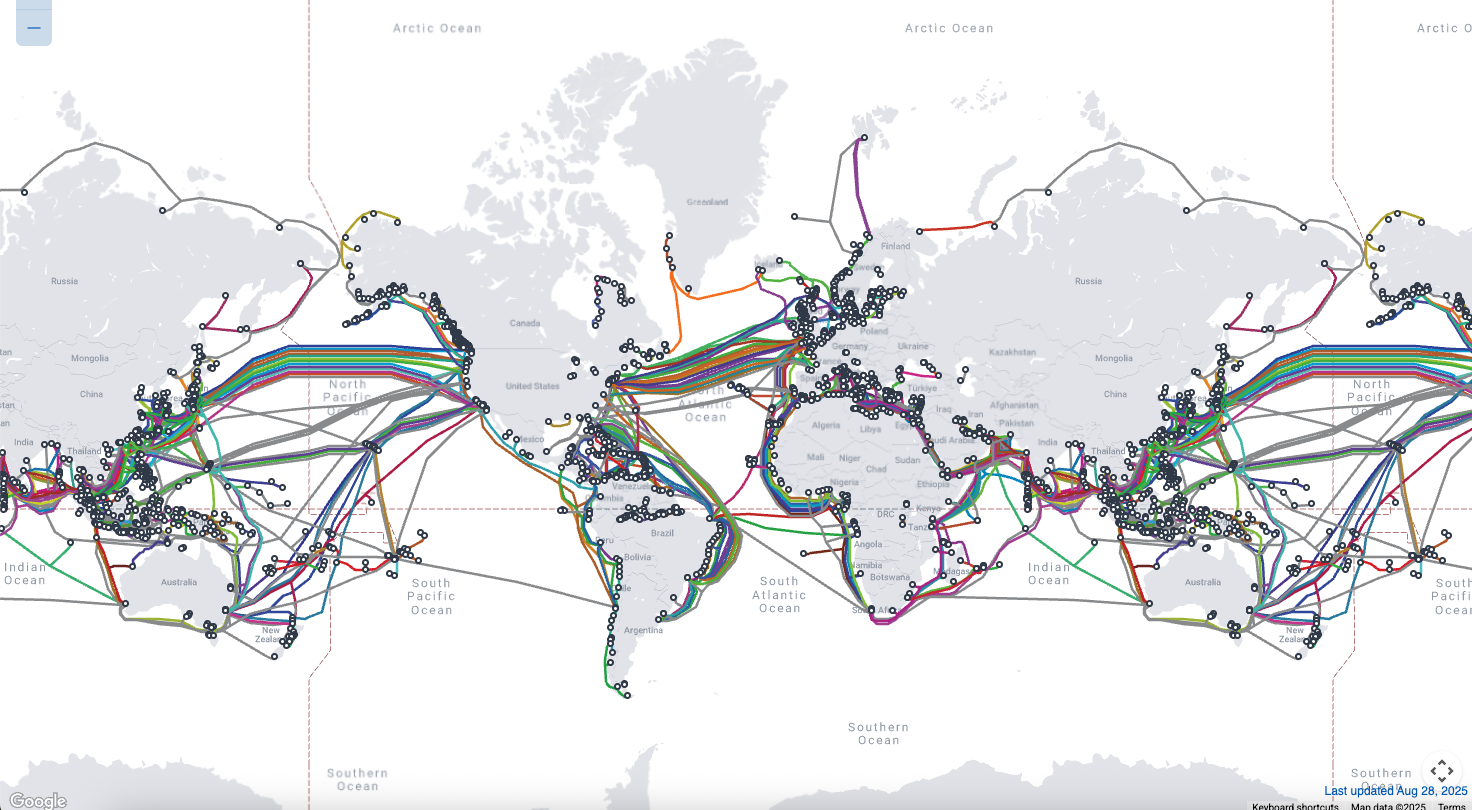
- ISP Network Infrastructure → The collection of physical cables (fiber optic cables, undersea cables, satellite links), routers, and switches that deliver internet services.
- WAN (Wide Area Network) Links → High-capacity connections (leased lines, MPLS, SD-WAN) that extend connectivity beyond the local data center to branch offices, cloud services, and end-users.
These links are designed for high availability, low latency, and redundancy.
3. Why is it important?
- Provides access to cloud platforms (AWS, Azure, Google Cloud).
- Enables remote employees and branch offices to connect securely.
- Supports business continuity by ensuring always-on connectivity.
- Allows hosting of websites, apps, and services that are publicly reachable.
- Critical for disaster recovery (DR) sites that must synchronize data across regions.
4. How is it planned?
When planning ISP and WAN connectivity, data centers consider:
- Redundancy → Using at least two ISPs with separate physical paths so one failure doesn’t cause downtime.
- Bandwidth → Calculated based on expected traffic (e.g., number of users, applications, backup requirements).
-
Technology Choices:
- Leased Lines → Dedicated fiber between the data center and ISP, guaranteed bandwidth.
- MPLS (Multiprotocol Label Switching) → Secure private WAN service, often used by banks and enterprises.
- SD-WAN (Software-Defined WAN) → Modern approach that uses internet connections intelligently to balance cost and performance.
- Service Level Agreements (SLAs) → ISPs guarantee uptime, latency, and support response times.
- Security → Firewalls, VPNs, and DDoS protection at the ISP edge.
5. Impact if not done correctly
- Single point of failure: If only one ISP is used, downtime could last hours or days.
- Poor user experience: Slow applications and websites due to lack of bandwidth.
- Business losses: E-commerce, financial services, and streaming platforms could lose millions during outages.
- Security risks: Insecure WAN links could allow man-in-the-middle attacks or data leaks.
6. Real World Example
- Amazon Web Services (AWS) builds redundant WAN links across regions to provide low-latency global services.
- For example, AWS India (Mumbai region) connects via undersea fiber optic cables to Singapore and Europe.
- Enterprises like banks often use MPLS WAN links for secure financial transactions, while startups may use SD-WAN for cost savings.
7. Live Sea Cable Map
Below is the screenshot showing current network of sea cables laied world wide. Click here to dig in more
👉 Easy Analogy:
- ISP = Highway system that connects your city (data center) to the rest of the world.
- WAN Links = The express lanes (leased lines, MPLS, SD-WAN) that guarantee faster, more reliable travel than public roads.
- Redundancy = Having two highways so even if one is blocked, traffic still flows.