Disaster Recovery (DR)
1. What is it?
Disaster Recovery (DR) is the set of strategies, tools, and processes that ensure IT systems and data can be restored quickly after a disaster—whether it’s a cyberattack, hardware failure, natural disaster, or human error.
It’s about getting business back online with minimal disruption.
2. Theoretical Definition
Disaster Recovery is a subset of Business Continuity Planning (BCP) focused specifically on restoring IT systems and data.
Key terms:
- RTO (Recovery Time Objective) → Maximum acceptable time to restore systems after a failure.
- RPO (Recovery Point Objective) → Maximum acceptable amount of data loss measured in time (e.g., last 15 minutes).
3. Why is it important?
- Prevents extended business downtime.
- Protects against catastrophic data loss.
- Ensures compliance with industry standards (e.g., PCI-DSS, HIPAA).
- Maintains customer trust and brand reputation.
- Avoids financial penalties due to SLA violations.
4. How is it planned?
- Risk Assessment
-
Identify possible threats: fire, flood, ransomware, hardware failure.
-
Define Critical Systems
-
Prioritize applications and data that must be recovered first.
-
Backup & Replication
- On-site backups, off-site backups, and cloud-based replication.
-
Use snapshots and continuous data replication for critical workloads.
-
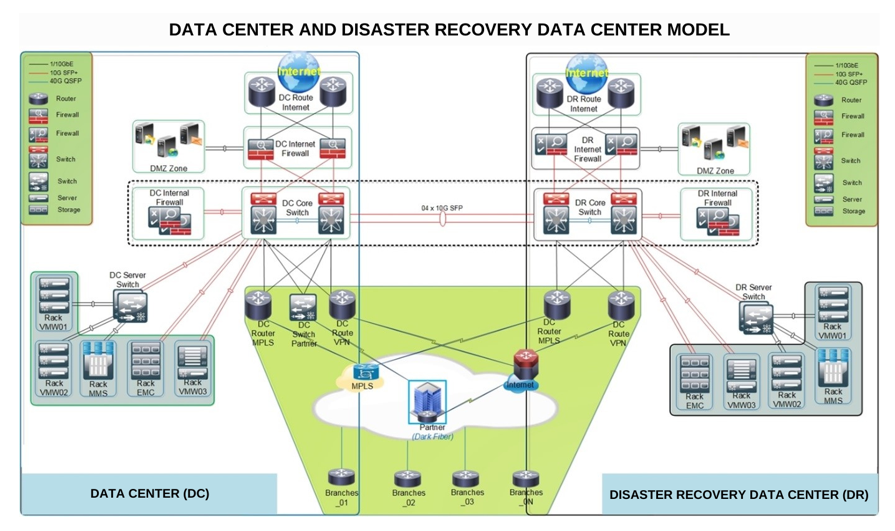
Failover Strategies
- Hot Site → Fully operational backup site, ready instantly.
- Warm Site → Partially prepared site, takes hours to activate.
-
Cold Site → Empty site with space/power, requires manual setup.
-
Testing & Drills
- Regularly simulate disasters to ensure recovery plans actually work.
5. Impact if not done correctly
- Extended downtime → business halts, lost revenue.
- Permanent data loss if backups fail.
- SLA violations and regulatory fines.
- Loss of customer confidence and market share.
6. Real World Example
- Delta Airlines (2016) experienced a data center power failure, grounding flights worldwide for days, costing ~$150M.
- Sony Pictures (2014) cyberattack caused massive data loss and system outages.
- AWS provides customers with DR services using multiple regions and availability zones for failover.
👉 Easy Analogy:
Disaster Recovery is like having a spare tire in your car:
- If you get a flat (server crash), the spare lets you keep going.
- Without it, you’re stranded until help arrives (business downtime).