Network Operations Center (NOC) and Monitoring
1. What is it?
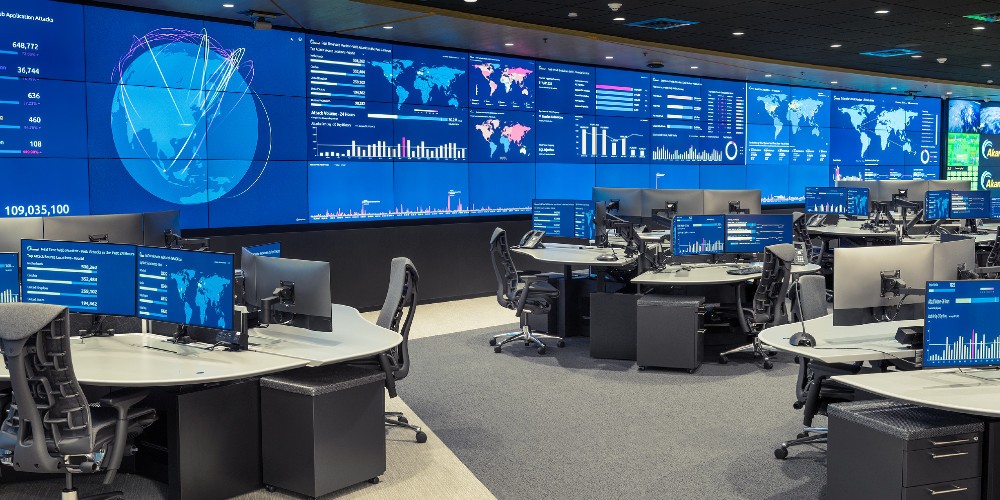
A Network Operations Center (NOC) is the command center of a data center or IT organization.
It’s a dedicated space (often a large room with screens and monitoring tools) where IT staff track the health of servers, networks, applications, and security in real-time.
Monitoring is the continuous process of collecting, analyzing, and acting on data about the infrastructure to ensure everything is running smoothly.
2. Theoretical Definition
- NOC → A centralized facility where network engineers and administrators monitor and manage network traffic, server uptime, application performance, and security events.
- Monitoring → The systematic use of tools and software (like Nagios, Prometheus, Zabbix, or SolarWinds) to detect problems before they impact end-users.
3. Why is it important?
- Ensures 24/7 availability of business-critical systems.
- Detects outages or cyberattacks early (reducing downtime).
- Improves performance by spotting bottlenecks before they affect users.
- Provides centralized visibility across multiple data centers or offices.
- Supports compliance with SLAs (Service Level Agreements).
4. How is it planned?
When setting up a NOC and monitoring strategy:
-
Physical NOC Setup
- Large display walls showing dashboards (traffic load, alerts, security events).
- Staffed by teams working in shifts to provide 24/7 coverage.
-
Monitoring Tools
- Infrastructure Monitoring → CPU, memory, disk usage, network throughput.
- Application Monitoring → Response times, API failures, error rates.
- Security Monitoring → Intrusion detection, firewall logs, suspicious traffic.
- User Experience Monitoring → Simulating end-user actions to check service quality.
-
Alerting & Escalation
- Automated alerts via email, SMS, or Slack when an issue occurs.
- Escalation process (Level 1 → Level 2 → Level 3 engineers).
-
Redundancy
- Secondary NOC in another region (Global NOC) to continue operations in case the primary fails.
5. Impact if not done correctly
- Problems go unnoticed → extended downtime.
- Customers may experience outages without IT knowing about it.
- SLA violations leading to financial penalties.
- Security breaches (like ransomware or DDoS attacks) might go undetected.
- Loss of reputation and customer trust.
6. Real World Example
- Google’s Site Reliability Engineering (SRE) teams act as a global NOC. They monitor millions of servers across continents using automation and dashboards.
- Telecom companies (e.g., AT&T, Reliance Jio) operate large NOCs to monitor internet backbone traffic, ensuring uninterrupted mobile and broadband services.
- A bank might use a NOC to monitor ATM networks, online banking, and fraud detection systems in real-time.
👉 Easy Analogy:
- Think of a NOC like an airport control tower.
- Controllers (NOC engineers) constantly watch planes (servers, apps, networks) to ensure smooth take-offs and landings (service delivery).
- If one plane goes off course (a server fails), they act immediately to prevent accidents (outages).